Material board · free
See whether it all goes together.
Start from a scheme, or build from nothing
These land on the table, not on the board — take two things off and it is yours.
Finishes
3 of 8
Surfaces, sold by the sqft or the metre. These are the decisions that are hardest to change later.
Furniture & lighting
0 of 6
Pieces, sold each. They move with you, so they are the cheapest place to change your mind.
Mix and match
What a designer would reach for next, and why.
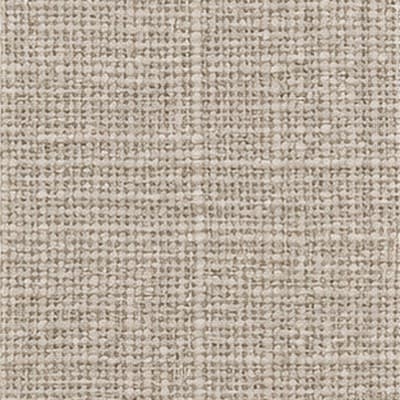
Natural linen
Curtains · RM 78 per metre
Goes with Warm oak veneer. Same warm-neutral family. Linen keeps the light soft where the timber would otherwise start to close the room in.
Also works with travertine
Ties 2 of your materials together
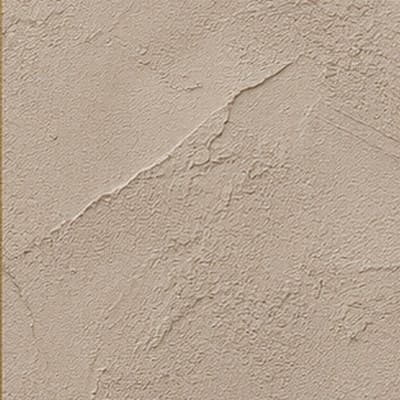
Clay plaster
Walls · RM 28 per sqft
Goes with Travertine. Both mineral, both matt. Wall and floor read as one continuous surface instead of two separate decisions.
Also works with ivory bouclé
Ties 2 of your materials together
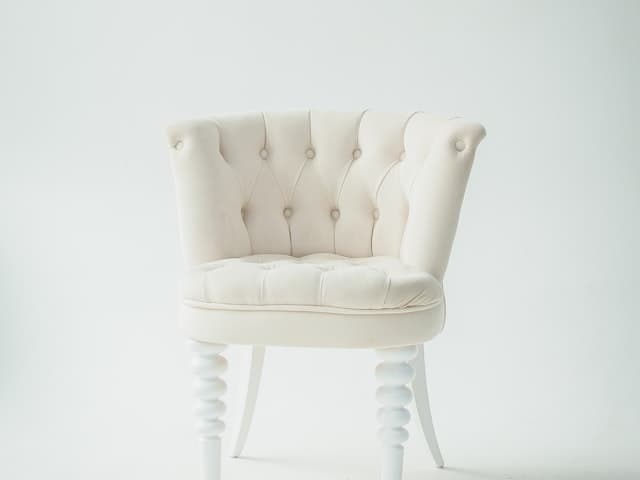
Tufted armchair
Seating · RM 1,890 each
Goes with Travertine. Pale stone gives an upholstered piece somewhere to sit visually — the chair becomes the object in the room.
Also works with ivory bouclé
Ties 2 of your materials together
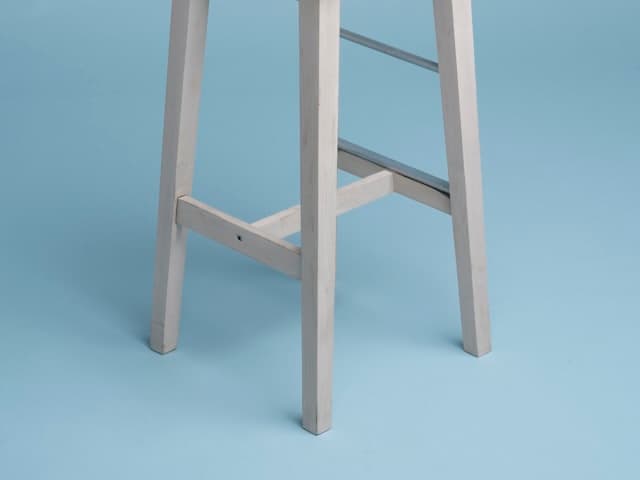
Timber stool
Seating · RM 480 each
Goes with Warm oak veneer. Solid timber next to timber veneer — the stool belongs to the joinery instead of competing with it.
On the table
3 materials, side by side
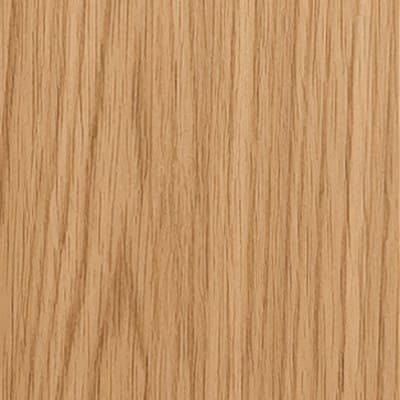 Warm oak veneerCabinetry · RM 62
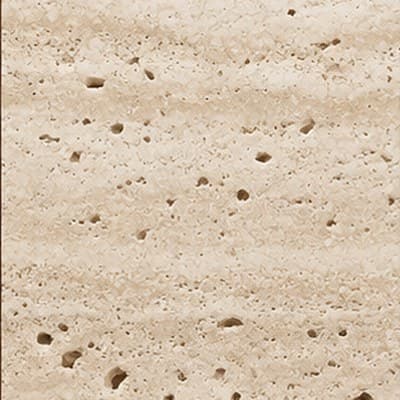 TravertineFlooring · RM 45
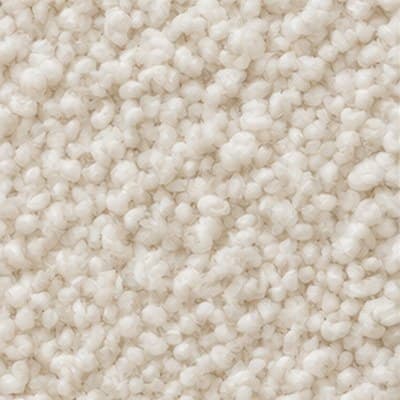 Ivory boucléUpholstery · RM 120
Indicative
RM 227
3 items. Finishes are per sqft or per metre and pieces are each, so this is a sense of scale — your real quantities come with the quote.
Scheme check
What a designer would say standing over this table.
3 of 6 layers
The layers of a room
- Floorcovered by Travertine
- Wallsnot covered yet
- Joinerycovered by Warm oak veneer
- Softcovered by Ivory bouclé
- Furniturenot covered yet
- Lightnot covered yet
No walls yet. Most of what you actually see from the door.
Your palette, as a room
- Dominant · Ivory bouclé
- Walls, floor, the big surfaces. Get this one wrong and nothing else rescues it.
- Secondary · Travertine
- Joinery and the large soft pieces — the tone that gives the room its character.
- Accent · Warm oak veneer
- Hardware, one chair, the edges. A little of it reads as intent; a lot reads as a second scheme.
60 / 30 / 10 is a rule of thumb, not a measurement — the lightest tone takes the big surfaces, the darkest takes the edges. Your real areas come off a floor plan.
What you're making
A board, in the sense a designer means it.
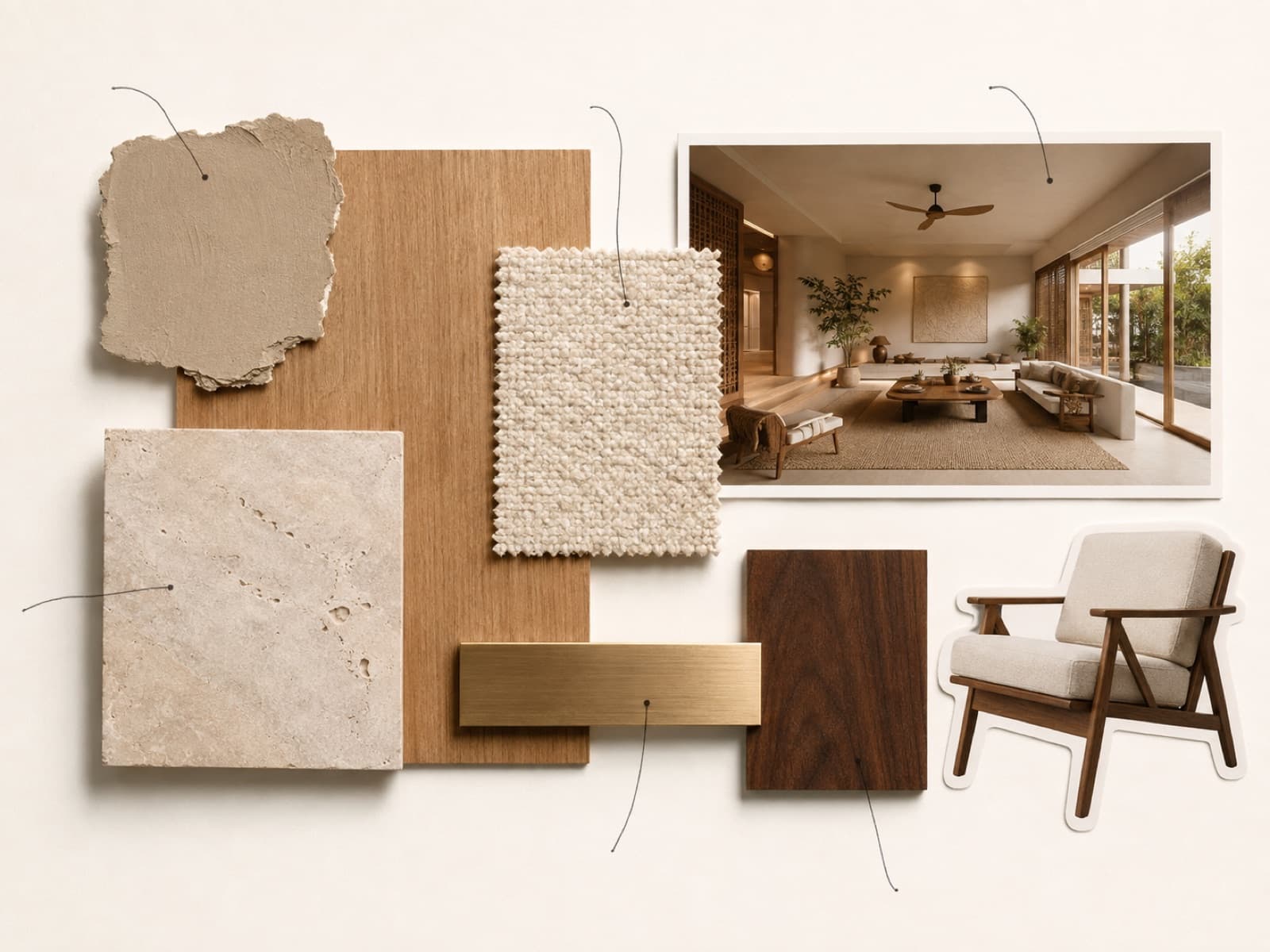
Clay plaster
The wall finish. Biggest surface in the room, so it is decided first.
Warm oak veneer
The joinery. Cut to the same sheet the cabinetry will be made from.
Travertine
The floor, as a real tile — because stone is judged by weight and edge, not by a photograph.
Ivory bouclé
Upholstery, at the size you would need to see the weave.
Brushed brass
Hardware. A strip rather than a handle, so it is compared as a metal.
Walnut
The second timber, kept small — the accent, not the scheme.
The room it adds up to
One render, so nobody has to imagine the six samples assembled.
The piece
A cut-out of the chair, at the scale it sits in the palette.
Then, the real thing
From a scheme to a room.
The names behind the trades
The board shows a lighting supplier and a stone supplier because the free tier prices things without introducing anyone. A free account resolves each one to a business you can message here.
Samples, in your own light
No screen shows travertine honestly, and a chip is a colour rather than a material. Request the samples on your board and they come to you — which is the only way this decision is ever really made.
Quantities, then a real quote
The total here adds a per-sqft finish to a per-item chair, so it is a sense of scale. Put a floor plan behind it and the same board becomes areas, quantities and a quote someone will stand behind.
Free account. Keeps the scheme you just built, names the suppliers, and lets you order samples of it.
Before you ask
The honest answers.
Is this actually free?
Yes, and there is no sign-up and no card. Pick as much as you like, rearrange it as often as you like, generate as many boards as you like. A free account is what names the suppliers and turns the board into samples and a quote.
Is the mix-and-match really AI?
It is a rule set, and we would rather say so. Every pairing here is one a designer would make — brass belongs with walnut, two timbers at different warmths fight — and those are stable relationships, not a prediction problem. Hard-coding them is why the suggestions answer instantly, work with no account, and can tell you why rather than only what. Nothing you do on this page is sent anywhere.
Why are the finishes coloured squares instead of photographs?
Because a photograph of the wrong slab is worse than no photograph on a page whose whole job is judging finishes against each other, and we will not caption a stock interior “travertine” to fill a tile. A tonal chip with a proper name is how a designer’s palette sheet presents a finish anyway. The real answer to what a material looks like is a sample in your own light, which is what a free account gets you.
Where do the prices come from?
Malaysian supply, in Ringgit, and indicative rather than quoted. Finishes are priced per sqft or per metre and pieces are priced each, so the total on the table is a sense of scale — it becomes a real number when there is a floor plan behind it with areas and quantities.
Why can't I see who supplies these?
The free tier shows what things cost, not who sells them; the introduction is the part we charge for. So the board says “stone supplier” and never a business name — the name is not withheld in the page, it is not sent to your browser at all. It resolves on a free account, and from there you message them without leaving the platform.
What if the finish I want isn’t on the shelf?
This shelf is 14 presets, which is what lets the page answer with nobody logged in and nothing loading. It is a starting point rather than the catalogue — the full range, and the option to put a supplier’s own product on your board, is what a free account opens.
Do I have to buy through you?
No. The board is yours and you can take it to anyone — that is what the copy button is for. The reason to stay is that prices, quantities and availability are already matched here, so nobody has to re-quote it from scratch.